KNOWING vs knowing
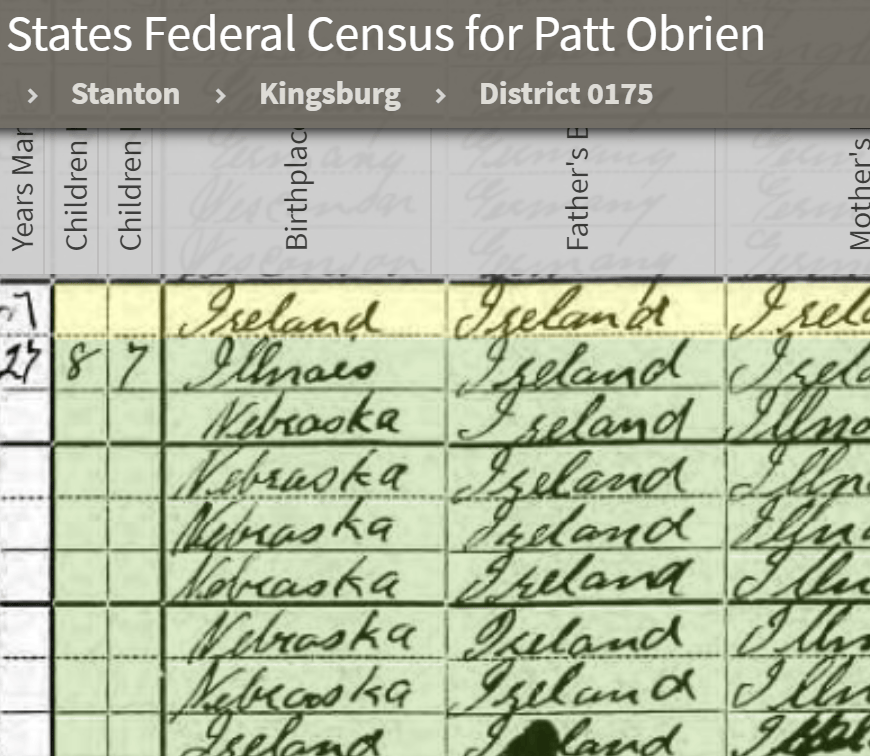
In genealogy, there’s a lot of emphasis on the difference between KNOWing and knowing.
Take my 2nd-Great-Grandfather Patt O’Brien for example…
Continue reading “KNOWING vs knowing”
In genealogy, there’s a lot of emphasis on the difference between KNOWing and knowing.
Take my 2nd-Great-Grandfather Patt O’Brien for example…
Continue reading “KNOWING vs knowing”
It’s Easter this Sunday. And for at least one of my maternal ancestors, that would have been a very busy time of year.
According to my great-grandmother’s handwritten notes about her family, her grandfather, William Noah Marsh, was “a Baptist clergyman in England.”
That really isn’t a ton of information to go on, but I’ve been trying to track him down none-the-less.
Continue reading “Looking for Noah”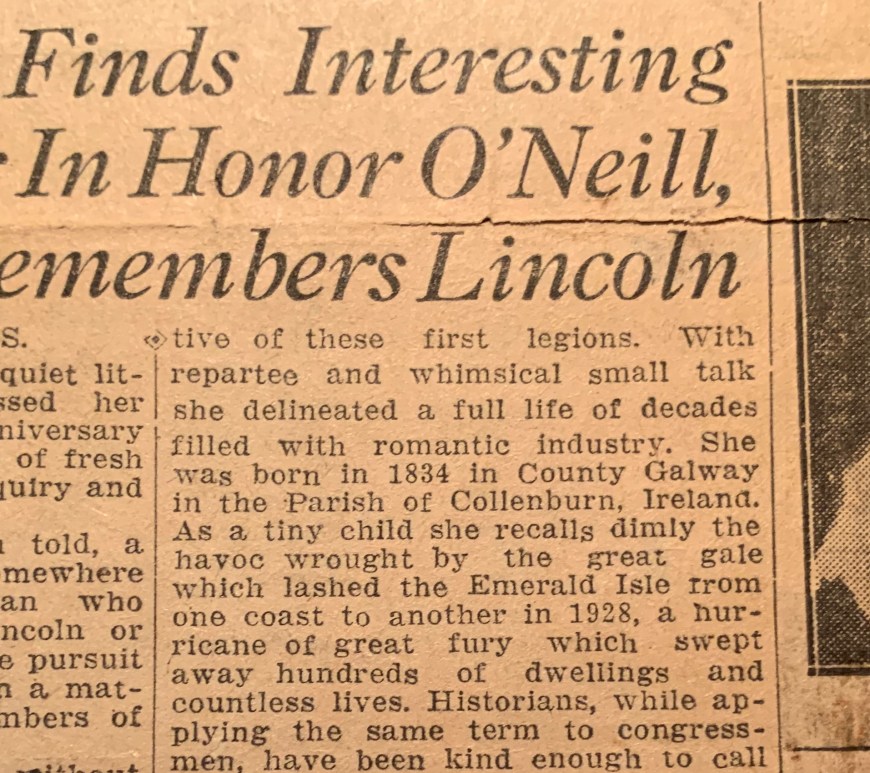
I love them! Were it not for a nosy news reporter, I would know far less about my maternal 3rd-Great-Grandmother than I do.
Luckily for me, she knew Abraham Lincoln.
Continue reading “Those Nosy News Reporters”
I’m a little late for St. Patrick’s Day but I have a little Irish tale of beginnings and endings.
Once upon a time, there lived an O’Neill named Thomas and his son Owen. The two men hailed from County Clare but, alas, life on the bonny Isle of Eire was not good. Potato blight and famine cursed the land.
Continue reading “An Irish Tale of…”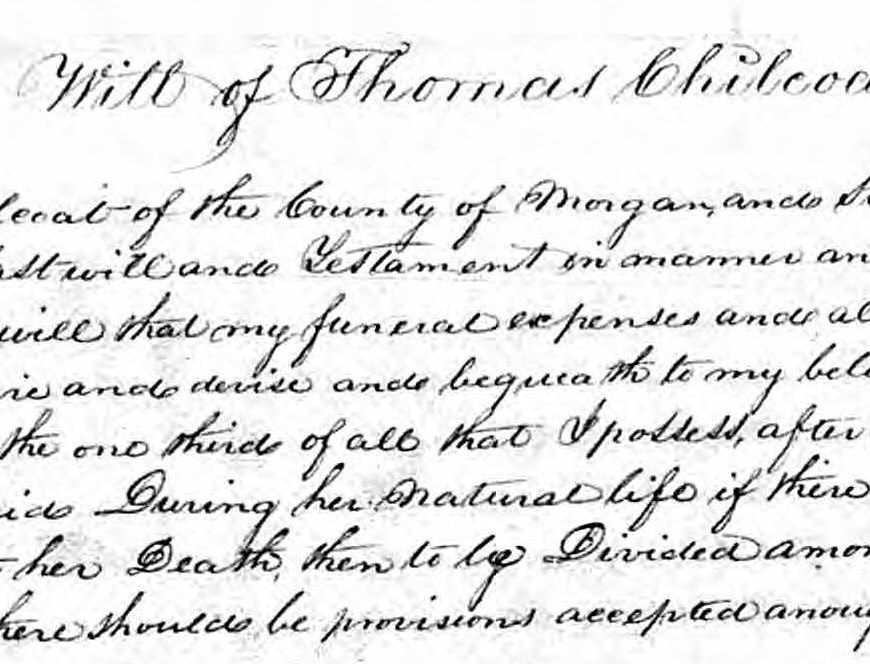
When Great-great-great-great-grandpa Thomas Chilcoat passed on, the will1 he left behind was relatively standard. First, pay all his expenses and his funeral. Second, provide for his wife. Then he starts divvying up his assets among his children: 2/5 to Robert, his eldest son [my 3rd great grandfather], 2/5 to Thomas, his youngest son, 1/5 to Elizabeth, his youngest daughter. And…
I give and devise to Sarah my eldest daughter only five dollars for the caus [sic] of her being a disobedient child
Thomas Chilcoat, Last Will & Testament, written 04 Jul 1840
One just cannot read a statement like that without wondering What in the heck did poor Sarah do to make Papa so angry?
Continue reading “The Disobedient Daughter”I’ve been told my Grandfather Weddle’s maternal relatives, the Marshes, weren’t very close. In fact, on the rare occasions that they all got together, they typically spent their time and energy playing “Top This!” [1]
You know how that game goes: one sibling brags about their new car, or big bonus, or the latest remarkable feat of [insert name of family member] and no sooner do they finish their story than the other siblings jump in with their own tales of incredible proportion.
And on and on it goes… ad nauseum.
All families do it to some degree. What is so sad about this sort of one-up-man-ship is that it detracts from real accomplishments. Perhaps this is how my great great uncle, Robert Jesse Downing Marsh, Continue reading “Top This”
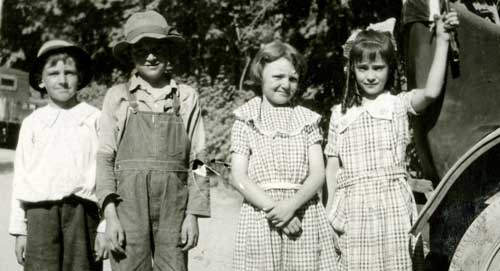
Remember that old commercial for Certs? Two. Two. Two mints in one. (You youngsters can watch it here.) Well, that’s sort of what happened to Dutch (Harold Seba Taylor, Sr) when it came to cousins. It went something like this… Continue reading “Double Cousins”

Remember this post, where I waxed eloquent about poor Elijah—my 5th great-grandfather, who died just before arriving in America from Germany?
Well, turns out that was a lie.
Things like this happen when researching ancestry. I try to be diligent. To check sources. Review information to see that it makes sense (you know, no children bearing children, times and places that make sense, that sort of thing). But even with all that, Continue reading “No More Elijah”
A cool wind whistled at the cabin’s window. At least marching will be pleasant, Benjamin thought, slinging his musket over his shoulder. “Come, Anna, girls; Onkel Martin is waiting for us.”
Martin lived near Drapers Meadow; his wife Anna and the children would be safe there while he was gone. They would have to hurry, though, to get there by sunrise.
They’d traveled the twenty miles so often—every Sunday since moving to Virginia—that his horse required little guidance; he gave Zelter his head and took the opportunity to study his family in the moonlight: Anna, bundled in furs and blankets as if winter already raged; little Lizzie and Eve, their drowsy heads bobbing with each of Zelter’s foot falls. Somewhere under all Anna’s furs was his son, still so tiny that he was concerned the child may never catch up. Already John Gustafson’s son was crawling about, getting into everything. Shouldn’t David be doing that? After all, Anna and Mary were confined at the same time.
Moreover, he worried about leaving his little family fatherless. He knew too well what growing up like that was like. Not that Onkel ever treated him like anything but his own son. Still, it wasn’t quite the same.
He rubbed his brow, trying to erase the furrows he could feel tightening. What would his father think? He tried to imagine a young Elijah looking down from heaven, watching the man he’d become. Would he approve his abandoning Anna and the children for war? Not that he had any choice of course; Dunmore had made it clear what happened to those in the militia who failed to report.
Anna laid her hand on his, loosening his solicitous grip on the reins. “You worry too much, Benjamin Weddle. We will be just fine; Martin will see to that. You just come home to us safely.” She leaned over and kissed his cheek. “We’ll be waiting for you.”
Benjamin Weddle, the only child of Elijah—who, you might remember, died at sea—left his home in Floyd County Virginia, sometime in September-1744, for what would soon be known as the Battle of Point Pleasant, an encounter between Shawnee Indians led by Cornstalk and the Virginia Militia. He left behind his wife, Anna, and three small children: Elizabeth (4), Eve (3), and David (3 m).
Controversy abounds around the battle itself. Continue reading “A Father’s Worry”
Elijah opened his eyes to a sea of bodies, crammed shoulder to jowl at the foot of his berth: Papa, Hans and Elizabeth, the children, behind them others he didn’t recognize. His lovely Mary held his hand, ever the vigilant nurse, her great belly nudged against his arm. The fetid smell of urine and vomit mixed with the aroma of onions and old tallow permeated the bowels of the ship. He opened his mouth to ask once more if they would take him on deck, then clamped his hand tight against his lips, choking down another wave of nausea. He locked eyes with Mary, willing her to hear his silent plea: Please, just let me feel the night, breathe in the salty breeze; I only need air—see, even the candle gutters in this fusty underworld.
“Look, darling. Broth. Come, you can manage a sip, can you not?” Her voice, like a snowflake floating in the sunshine, coaxed him back from the brink, charged him to answer.
“No. I—” His elbow jabbed her stomach as he lurched toward the bucket and the baby within kicked, reminding him of everything he would miss. I must tell Mary what she’s to do after I die, he thought.
“The baby…” His words were choked, a hoarse whisper. “Hans will take—” He’d begged his brother, before they’d left Germany, to take the child as his own if he should not make it.
Mary bent her face to his, straining to hear his words, her green eyes filled with sadness. She knew. He could taste her grief, her fear, and he reached for her hand, held it tight as if she alone could guide him to the other world. Can you smell it, Mary? Like a cold winter’s morning: sweet, sharp. The ship around him faded, replaced by the hills and brooks of his precious Schwarzwald. Home.
A tear touched his skin, hot with pain, and for a moment he thought of returning to the stale cabin where his family stood, hunched over him. But America was not his dream; it was Papa’s, and Hans Martin’s. Even his Mary fancied the promise of fortune. Their dream…
The air, Mary, feel it? I can breathe.
Elijah Weddle, like many who voyaged to America, died at sea.
In an ironic twist of fate, though, he died within miles of his journey’s end, near the inlet that would take him to the Port of Philadelphia.
Or so the legend goes. Continue reading “One Trunk”


